Retrieval slows before storage does
The name is still filed. The path to it simply takes longer than it did at 35. That gap is what people notice first, and it is one of the most consistently documented age-related changes in healthy adults.
It was never called medicine. It was a habit — a spoonful, warm water, a slow first hour of the day. Here is what that habit looked like, and what today’s research actually says about the way memory changes after 50.
 Watch the free presentation
No signup • Closes when you close the tab
Watch the free presentation
No signup • Closes when you close the tabSponsored content. Educational only — this is not medical advice.
Not a decline story. Four ordinary changes that researchers describe as part of a normal adult brain getting older — and that most people never had explained to them.
The name is still filed. The path to it simply takes longer than it did at 35. That gap is what people notice first, and it is one of the most consistently documented age-related changes in healthy adults.
Slow-wave sleep tends to shorten with age. Since a good share of memory consolidation is thought to happen during the night, a lighter night can show up the next morning as a foggier one.
The brain takes roughly a fifth of the body’s blood supply while weighing about two percent of it. That is why cardiovascular health and cognition are so often studied side by side rather than separately.
After decades of practice, most days stop asking for new learning. Less novelty means fewer chances to rehearse the exact skill people are worried about losing.
“Forgetting a name means something is seriously wrong.”
Occasional lapses happen at every age, including at 25. Clinicians look at pattern and progression over months, not at a single embarrassing moment at a dinner table. If the pattern is changing, that is a conversation for a doctor — not for a web page.
“A daily crossword covers it.”
Practising one puzzle mostly makes you better at that puzzle. Research on everyday cognition tends to look at the wider picture instead: sleep, movement, diet quality, hearing, blood pressure and how much company you keep.
“It runs in my family, so nothing I do matters.”
Family history is one input among many, and it is the one nobody can change. The daily inputs are the ones large observational studies keep returning to, precisely because they are the ones still in your hands.
Nothing here is a treatment. It is the ordinary structure the old kitchen ritual sat inside — and the order matters more than the ingredients.
Daylight on your face within thirty minutes of waking. Water before coffee. Something with protein before something sweet. The spoonful ritual belongs here — alongside food, not instead of it.
Simplest version: open the curtains before you open the phone.Twenty to thirty minutes of walking on most days is the dose that keeps appearing in the literature on healthy ageing. Pace matters less than the fact that it happened at all.
A walk you actually take beats a gym plan you admire from a distance.Same bedtime, cool dark room, last caffeine early in the afternoon. Most people trying to fix a foggy morning are really looking at a night problem wearing a morning costume.
If snoring or daytime sleepiness is part of your picture, raise it with your doctor.Beekeeping in the eastern Mediterranean is old enough that it shows up in temple carvings, tax records and household inventories. Sealed jars recovered from ancient tombs are part of why honey is so often described as one of the few foods that keeps almost indefinitely under the right conditions.
What is easy to miss is how unremarkable it was. In those kitchens the jar was not a remedy on a high shelf. It sat next to the bread and the oil, used daily, in small amounts, by everyone in the house. The Mediterranean pattern that modern nutrition research spends so much time on is essentially a description of that ordinary table — plants, olive oil, fish, nuts, very little ultra-processed food, and a slow meal with other people at it.
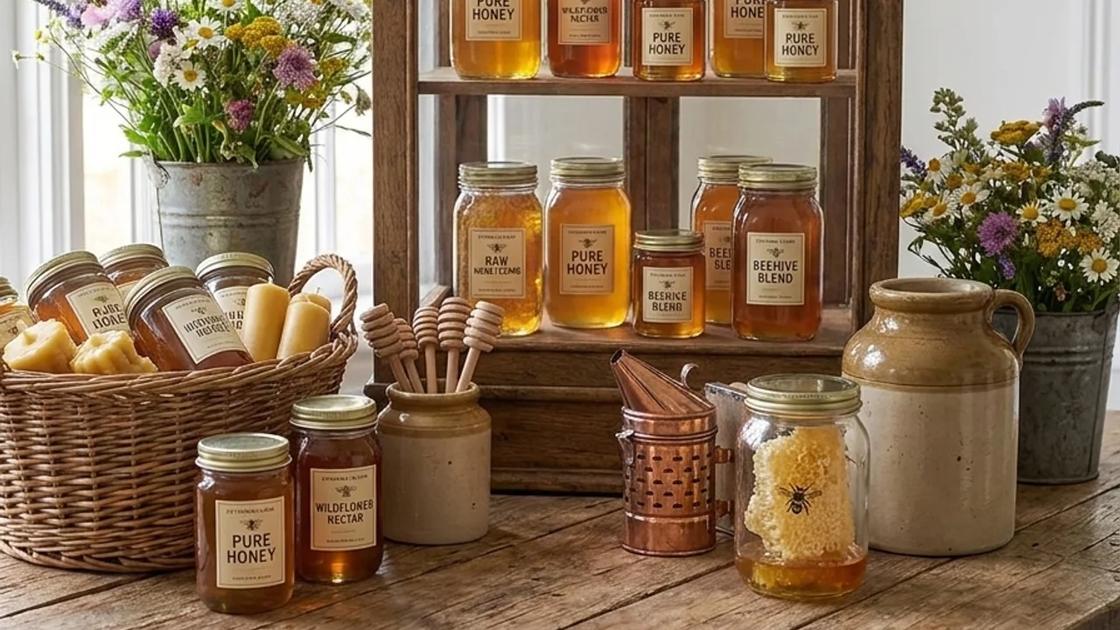
Modern raw honey is a different thing from the supermarket squeeze bottle: unheated, unfiltered, still carrying pollen and the character of whatever was blooming that season. That is the version the old ritual was built around.
Nobody in that kitchen believed a spoonful did the work by itself. It was one small, repeatable anchor in a day that already contained daylight, walking, real food and company. The anchor is easy to copy. The day around it is what makes it mean anything.
These are common experiences, not symptoms of anything specific, and nothing on this page can tell you what they mean for you.
You walk into the room with total purpose and it evaporates somewhere between the door and the middle of the floor.
You can picture their kitchen, their car and their dog. The name arrives forty minutes later, uninvited.
Your eyes finished the page. Nothing on it stayed. So you go back to the top and try again.
Three people talking at once, and the sentence you were holding quietly slips out of your hands.
The daily search. Usually the glasses are somewhere no reasonable person would have put them.
Six items used to be effortless. Now the list goes on paper, and it feels like a small surrender.
Please read this part properly. Everyday lapses like these are extremely common and are not a diagnosis. But if what you are noticing is clearly getting worse over months, if it is affecting your work, your driving, your finances or your safety, or if people close to you have started mentioning it, book time with a doctor. That is the right next step, and no article, video or product replaces it.
“[REPLACE — verified customer comment. Keep it factual and about their own experience. No health outcome claims.]”
First name L. — City, ST“[REPLACE — verified customer comment. Keep it factual and about their own experience. No health outcome claims.]”
First name R. — City, ST“[REPLACE — verified customer comment. Keep it factual and about their own experience. No health outcome claims.]”
First name M. — City, STResults disclaimer. Comments reflect individual experiences and are not typical, not verified as representative, and not a promise of any outcome. Individual results vary. Nothing here should be read as a claim that any product treats, prevents or improves any condition.
An advertisement. It is sponsored content written to introduce a video presentation, and it contains affiliate links. If you buy something after clicking through, we may be paid a commission. That does not change the price you pay.
No. Everything here is general educational information about ageing and daily habits. It is not a diagnosis, not a treatment plan and not a substitute for talking to a qualified healthcare professional who knows your history.
No. The presentation is free to watch. There is an offer at the end, which you are free to ignore.
Around eight minutes. It is easier to follow with sound on, and it works on a phone.
Yes, it always matters. Foods and supplements can interact with medication. Before adding anything new — including anything mentioned in the presentation — check with your doctor or pharmacist, especially if you are managing blood sugar, blood pressure or anticoagulation.
No. Honey is a sugar and should be counted as one. It is not recommended for infants under twelve months, and anyone managing diabetes or a bee-product allergy should speak to their own clinician first. This page is not making a recommendation for your situation.
This page does not ask you to enter personal details. Standard analytics and advertising cookies may be used to measure traffic. The full picture is in the Privacy Policy, linked in the footer below.
The presentation walks through where the ritual came from, how it fits into the rest of the day, and what to look for on a label if you decide it belongs in your kitchen.
Watch the free presentation Takes about 8 minutesSponsored content • Affiliate links • Educational only • Not medical advice
Last updated: 2026
This policy explains what information is collected when you visit this website, how it is used, and the choices available to you. It applies to this website only and not to any third-party site you reach through a link.
This website does not knowingly collect information from anyone under 18.
Cookies, pixels and similar technologies may be used for essential site functions, analytics and advertising measurement. You can block or delete cookies through your browser settings; some parts of the site may not work as intended if you do.
Information may be shared with service providers acting on our behalf, including hosting, analytics, advertising measurement and customer support providers. Information may also be disclosed where required by law, or in connection with a business transfer. Personal information is not sold in exchange for money.
This site contains links to third-party websites, including advertisers and merchants. Those sites operate under their own privacy policies and we are not responsible for their practices. Review their policies before providing information to them.
Information is retained only as long as needed for the purposes described above or as required by applicable law, after which it is deleted or anonymised.
Depending on where you live, you may have the right to request access to, correction of, or deletion of your personal information, to object to or restrict certain processing, to request portability, and to opt out of targeted advertising or sale or sharing of personal information. You may also withdraw consent where processing is based on consent. Requests can be sent through the contact page and will be handled within the timeframe required by applicable law. Exercising these rights will not result in discriminatory treatment.
Reasonable technical and organisational measures are used to protect information. No method of transmission or storage over the internet is completely secure, and absolute security cannot be guaranteed.
Information may be processed in countries other than the one you live in, where data protection laws may differ. Appropriate safeguards are applied where required.
This policy may be updated from time to time. The revised version takes effect when posted on this page.
Questions about this policy can be sent through the contact page linked in the footer.
Last updated: 2026
By accessing or using this website you agree to these Terms of Use. If you do not agree, please stop using the site.
This website publishes advertising and general educational content. It does not provide medical, legal, financial or professional advice of any kind, and no doctor-patient or professional relationship is created by using it. Always consult a qualified professional about your own circumstances.
Content on this site is sponsored and contains affiliate links. The operator may receive compensation, including commissions on sales, when you click a link or complete a purchase. This does not increase the price you pay.
We are not the manufacturer, seller or fulfilment party for any product referenced. Any purchase is a transaction between you and the merchant, governed by that merchant’s own terms, refund policy and shipping policy. All questions about orders, billing, delivery or returns must be directed to the merchant.
You agree not to use this site unlawfully, to attempt unauthorised access, to interfere with its operation, to scrape or copy it systematically, or to reproduce its content commercially without written permission.
All text, layout, graphics and code on this site are protected by intellectual property law and remain the property of their respective owners. Third-party names and marks are the property of their owners and are used for identification only, without implying endorsement.
The site and its content are provided on an as-is and as-available basis, without warranties of any kind, express or implied, including accuracy, completeness, fitness for a particular purpose and uninterrupted availability.
To the maximum extent permitted by law, the operator of this site is not liable for any indirect, incidental, consequential or special damages, or for any loss arising from your use of this site, your reliance on its content, or your dealings with any third-party merchant.
You agree to indemnify and hold harmless the operator of this site against claims arising from your misuse of the site or breach of these terms.
These terms may be updated at any time; the current version governs your use. If any provision is found unenforceable, the remaining provisions continue in force.
These terms are governed by the laws applicable at the operator’s principal place of business, without regard to conflict-of-law rules.
Questions about these terms can be sent through the contact page linked in the footer.
This page is an advertisement. No payment is collected here and no order is fulfilled here. Any purchase you make happens on a third-party merchant’s website, under that merchant’s own terms.
The refund window, the conditions that apply, and the return address are published on the merchant’s checkout page and order confirmation email. Read them before you order, and keep the confirmation email.
Reach us through the contact page and we will point you to the correct support channel for the offer you clicked. We cannot issue refunds ourselves, access your order, or change a merchant’s decision.
Nothing is shipped from this website. Processing times, carriers, delivery estimates, tracking and shipping costs are set by the merchant whose checkout you complete, and are shown before you pay.
Contact the merchant’s support directly with your order number if a parcel is late, damaged or missing. If you cannot locate their details, reach us through the contact page and we will direct you to the correct channel.
This page is sponsored content and contains affiliate links. The operator may be compensated, including by commission, when you click a link or complete a purchase. This compensation may influence which products appear and how they are presented.
All content is general and educational. These statements have not been evaluated by the Food and Drug Administration. No product referenced is intended to diagnose, treat, cure or prevent any disease. Nothing here replaces personalised advice from a qualified healthcare professional, and you should speak with one before changing your diet, starting a supplement or adjusting medication.
Individual results vary. Testimonials and examples are individual experiences, are not necessarily typical, and are not a guarantee of any outcome.
Content is published in good faith and may become out of date. No warranty is made as to accuracy or completeness, and no liability is accepted for decisions made in reliance on it.
Links lead to third-party sites we do not control. Their content, terms and policies are their own responsibility.
If you are concerned about changes in memory, thinking or mood — particularly if they are worsening or affecting daily life — contact a qualified healthcare professional. In an emergency, contact your local emergency services.